
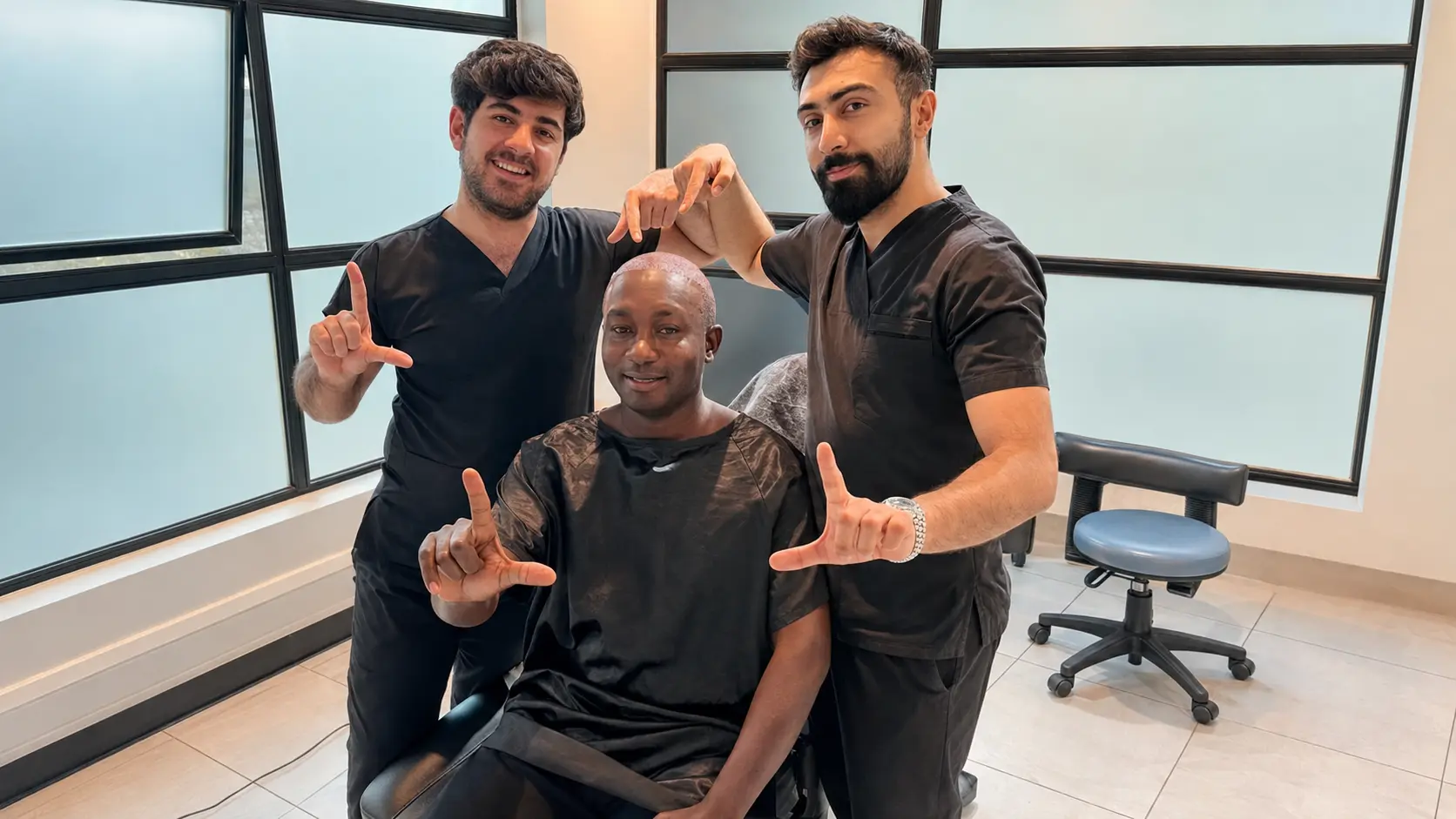
Hair loss can change how you feel about your appearance, but choosing treatment should begin with clear medical guidance. Nairobi now gives patients across Kenya and East Africa access to modern hair restoration without the cost and disruption of travelling overseas.
Why patients choose a hair transplant in Nairobi
Nairobi combines international flight access, established private healthcare and specialist-led treatment close to home. Patients can attend an in-person assessment, return for washing and follow-up, and remain near their support network throughout recovery.
Experience with African and Afro-textured hair
Curly and coiled follicles may curve beneath the skin. Safe extraction therefore requires careful angle control, an appropriate punch choice and a conservative approach to the donor area. Implantation must also respect the direction and visual character of Afro-textured hair. A consultation should evaluate both what can be restored and what must be preserved.
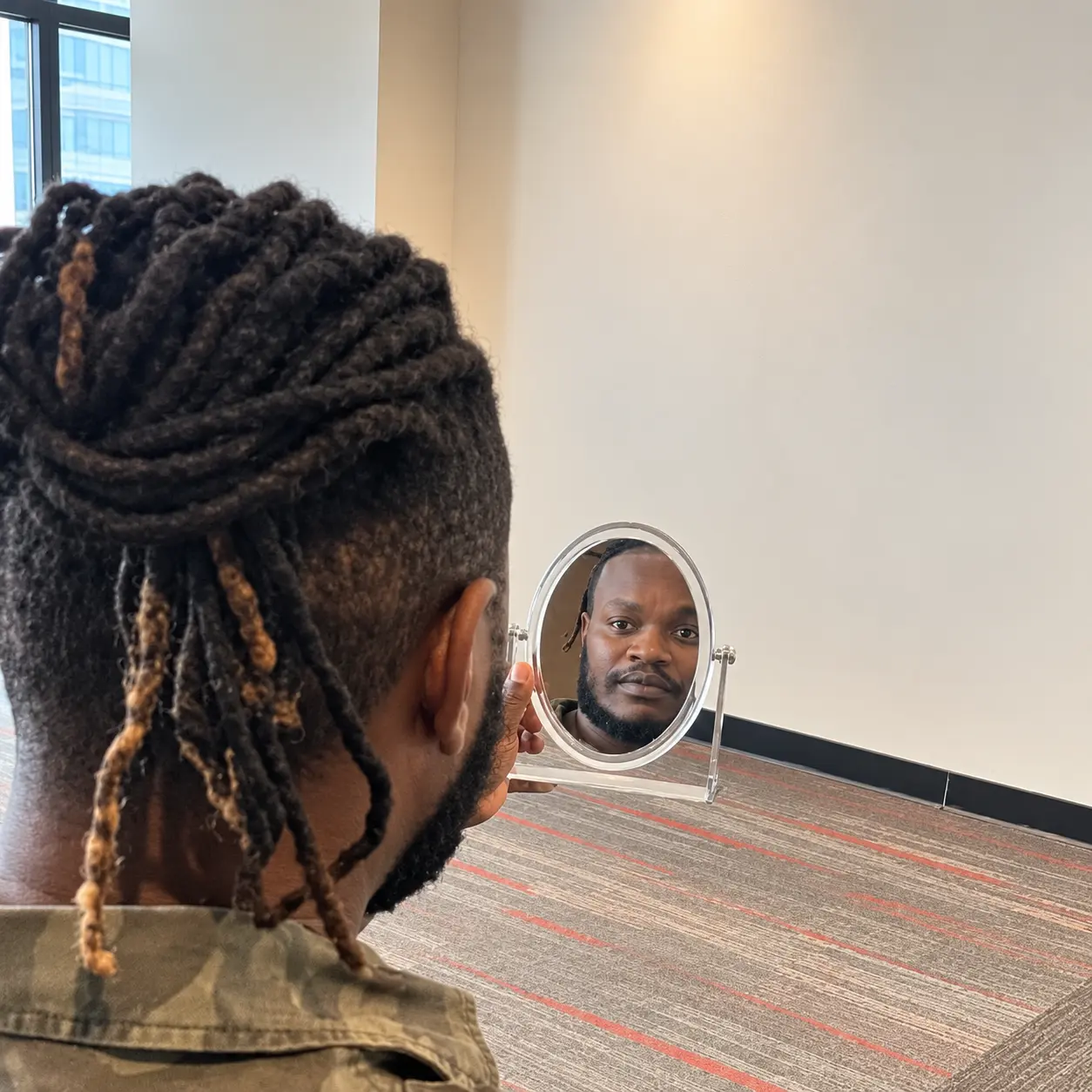
Natural results begin with a hairline designed for the individual, not a standard template.
FUE hair transplant and clinical standards
During Follicular Unit Extraction, suitable follicles are taken individually from the donor area and placed into planned recipient sites. The procedure is performed under local anaesthesia. Hygiene controls, informed consent, medical screening and a documented aftercare plan are essential parts of responsible treatment.
Common questions and myths
Does a hair transplant affect fertility?
No. Hair transplantation is a local scalp procedure and does not involve the reproductive system.
Will transplanted hair look artificial?
It should not when hairline shape, graft direction and density are planned carefully. The result also depends on available donor hair and healing.
Can African hair be transplanted?
Yes. The technique must be adapted to the curl pattern above and beneath the scalp.
Hair transplant cost in Kenya
Published estimates commonly vary because no two treatment plans require the same number of grafts or level of complexity. A working range may be KSh 150,000 to KSh 400,000, but an accurate quotation should follow a donor-area and medical assessment. Ask what the fee includes, who performs each stage, what aftercare is provided and how complications are handled.
Recovery, growth and long-term results
Redness and small scabs are expected early in recovery. Temporary shedding may follow before new growth becomes visible. Improvement develops gradually over several months, with maturation often continuing toward 12 months and sometimes longer. Outcome and timing vary by patient.
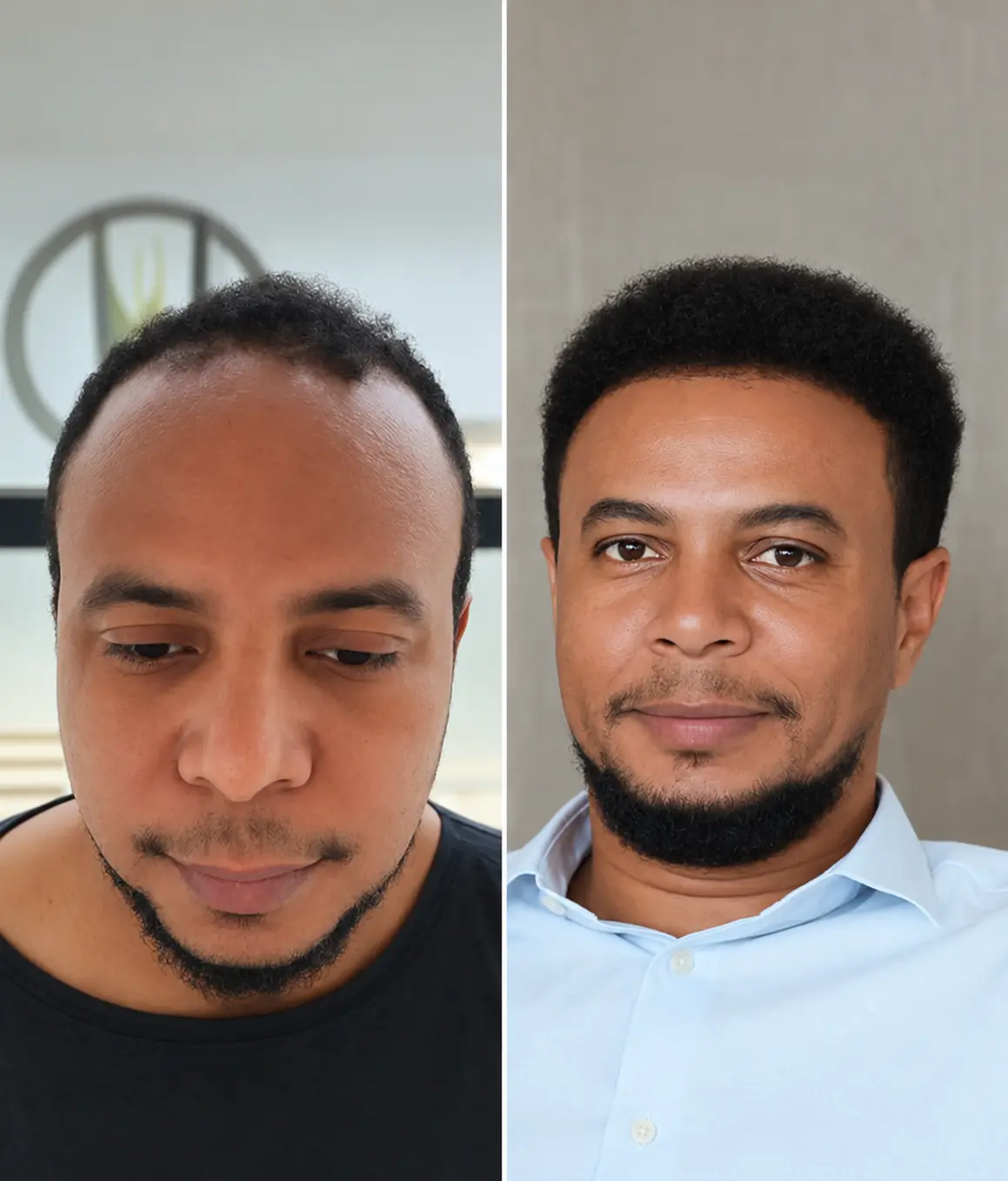
Begin with an honest assessment.
Share clear scalp photos or book a clinic visit to understand your donor capacity and suitable options.