
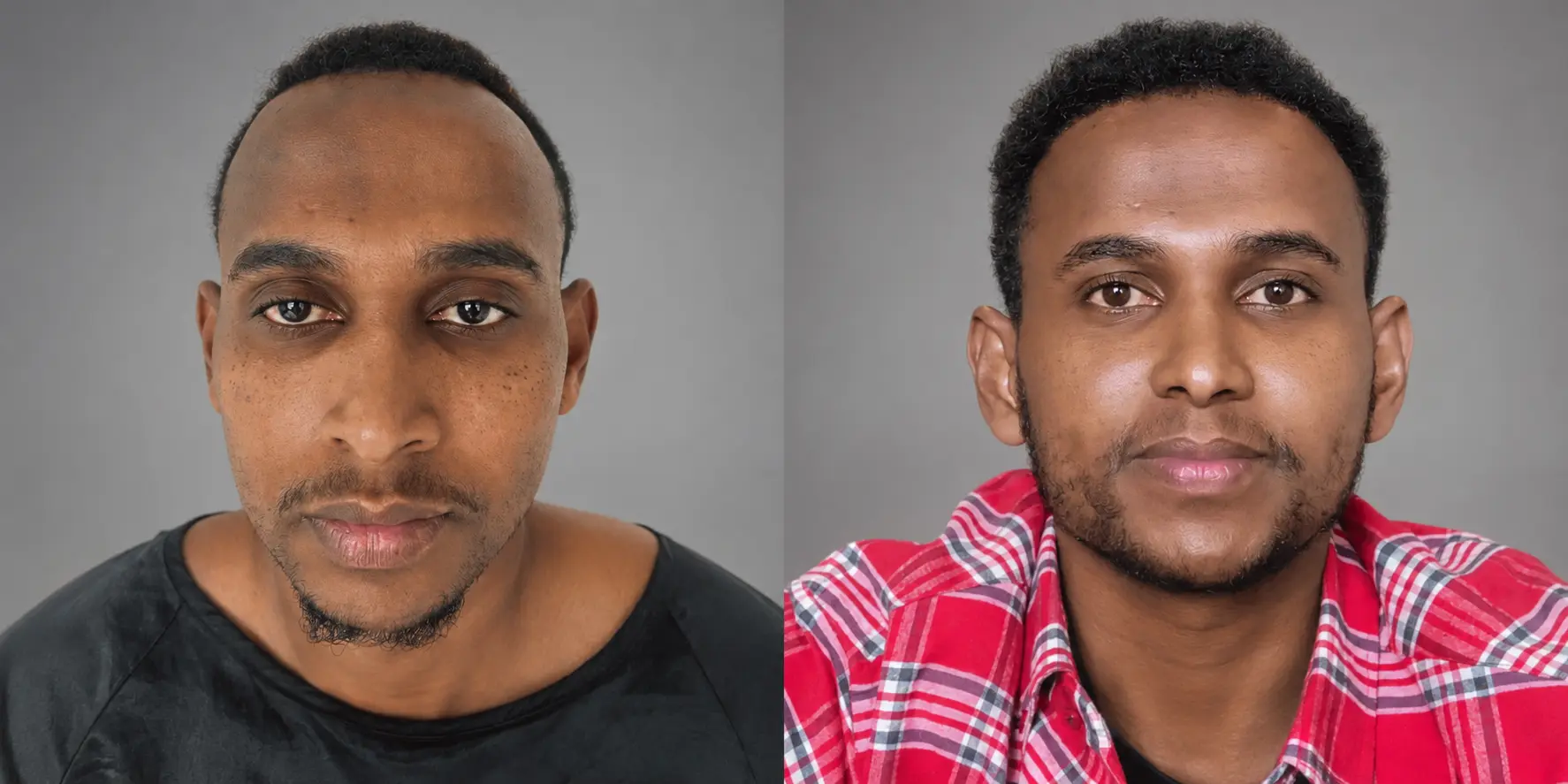
Sheriff wanted to improve a receding frontal hairline without creating a result that looked obvious or out of proportion. His case shows why assessment, conservative planning and patience matter as much as the procedure itself.
His reason for choosing treatment in Nairobi
Access to an experienced team in Nairobi meant Sheriff could receive face-to-face planning and local follow-up without travelling overseas. The decision was based on the team’s approach to African hair, realistic hairline design and the ability to review recovery in person.
Consultation and hairline planning
The team assessed the pattern of recession, donor density, follicle characteristics, facial proportions and the possibility of future loss. The planned hairline was designed to improve framing while preserving grafts for long-term needs.
The FUE procedure
Suitable follicular units were extracted individually from the donor area and implanted into carefully prepared recipient sites. Direction, angle and distribution were controlled to help the new hair blend with Sheriff’s existing growth.
- AssessmentHair-loss pattern and donor capacity reviewed.
- DesignA natural, age-appropriate frontal frame agreed with Sheriff.
- ProcedureFollicles extracted and implanted under local anaesthesia.
- Follow-upWashing, healing and growth monitored over the following months.
Growth and renewed confidence
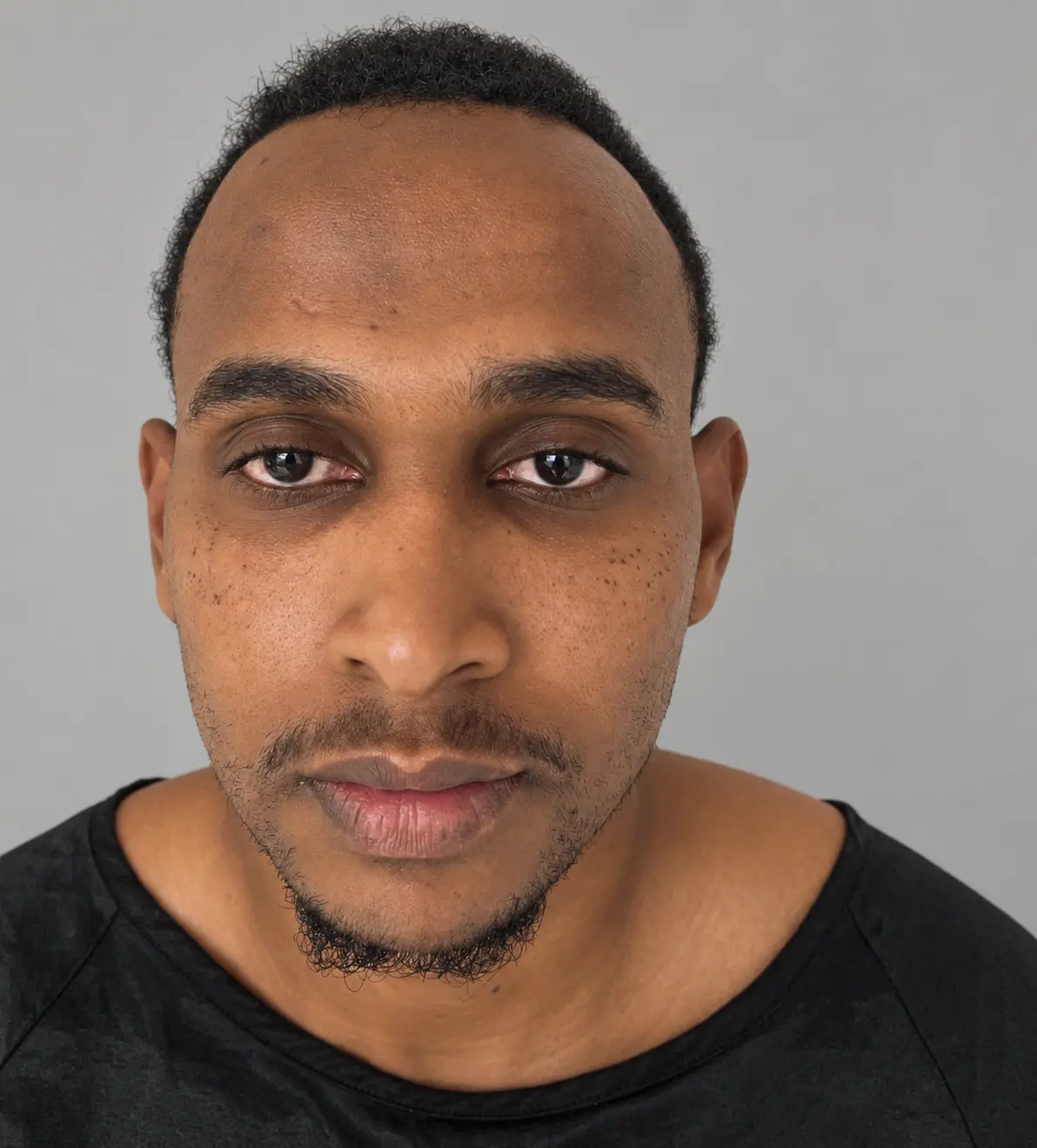
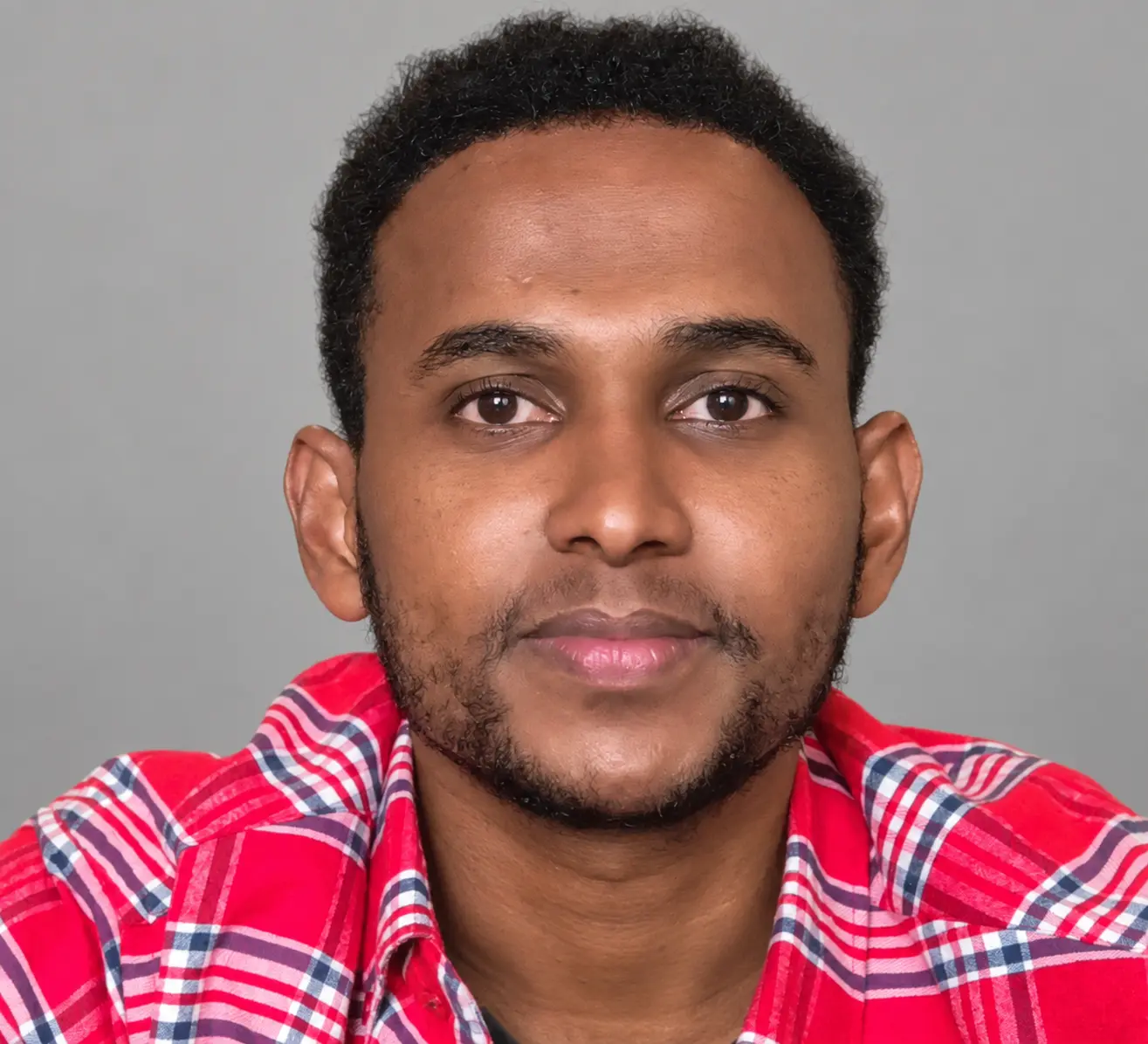
Early healing was followed by the normal shedding and regrowth cycle. As the transplanted follicles produced new hair, the frontal area gained a fuller, more balanced appearance. His photographs document his individual outcome; they are not a guarantee of another patient’s result.

What patients can learn from Sheriff’s journey
Compare clinics by who plans and performs the procedure, how donor hair is protected, whether results shown are genuine, and what follow-up is available. A reliable team should be willing to explain limitations as clearly as benefits.
Start with your own assessment.
Your plan should be based on your hair, donor area and long-term pattern, not another patient’s graft count.